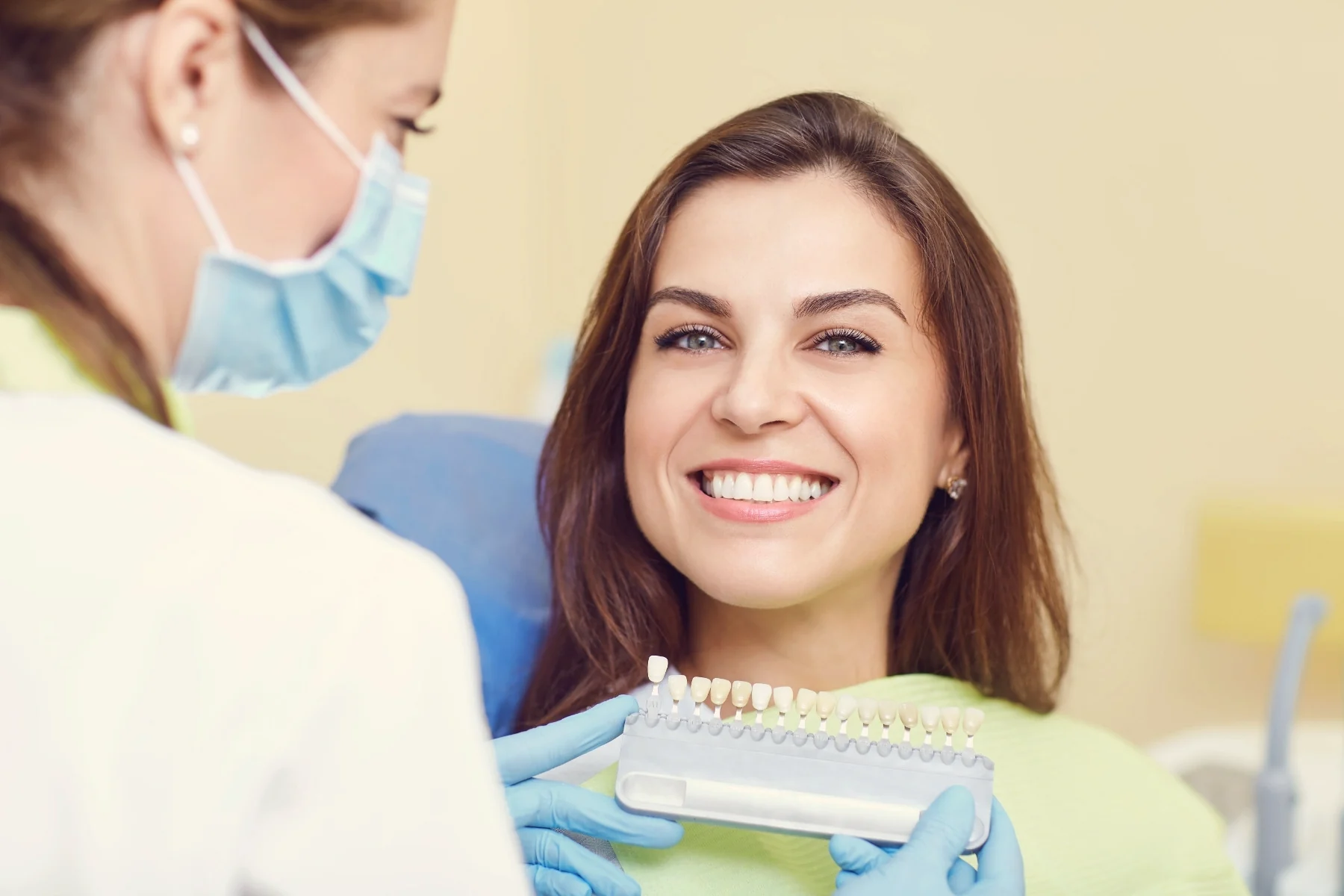

$30 whitening strips on Amazon. $80 LED kits on Instagram. Charcoal toothpaste promising "Hollywood White" teeth in 7 days. The teeth whitening market is massive — and most products don't deliver what they promise.
Before you spend money on another product that'll disappoint (or worse, damage your enamel), here's what you need to know as a patient, not a consumer.
All real whitening uses some form of peroxide — hydrogen peroxide or carbamide peroxide. The peroxide penetrates the enamel and breaks down the pigment molecules causing stains. That's it. No magic, no secrets.
The difference between a drugstore product and professional treatment is the peroxide concentration and how it's applied.
Concentration: 6-10% hydrogen peroxide. They work for mild surface stains. You need 14-21 days of consistent use to see moderate results. The problem: strips don't conform to your tooth shape, so whitening is uneven — edges get lighter than the spaces between teeth.
The LED light in consumer products is decorative. Studies show it doesn't significantly accelerate whitening at the concentrations allowed without dental supervision. You're paying an extra $60-100 for a blue light.
Whitening toothpastes are abrasive — they scrub off surface stains but don't change the intrinsic tooth color. Activated charcoal is even more abrasive and can damage enamel with prolonged use. If your teeth look "whiter," it's because you're sanding off the outer layer.
Concentration: 25-40% hydrogen peroxide, applied with gum protection. A single 60-90 minute session can lighten teeth by several shades, depending on the type of stains. The dentist protects your gums with a resin barrier, controls exposure time, and adjusts for sensitivity.
Typical price in Miami: $500-1,000 per session. Results are usually visible the same day.
Your dentist takes an impression of your teeth and creates custom silicone trays that fit closely. You use 10-22% carbamide peroxide gel for 1-2 weeks, 30-60 minutes per night. The close fit helps the gel whiten evenly — including between teeth.
Typical price in Miami: $200-400 for the kit. This is often the better long-term value because you can buy gel refills for $25-40.
Studies comparing in-office whitening with dentist-supplied trays used at home reach the same conclusion: the final shade is similar. A 2025 meta-analysis of 32 studies found no difference in shade change or in the risk of sensitivity, and a review of 28 systematic reviews concluded the same. The difference is time: in the office the change shows the same day; at home it takes one to two weeks.
The authors themselves rate this evidence as low to moderate quality. That is why the plan is decided case by case, after checking your teeth.
Whitening doesn't work on crowns, veneers, or fillings — only on natural tooth structure. If you have visible restorations on your front teeth, whitening can make them more noticeable because the natural tooth changes color but the restoration doesn't.
If you have sensitive gums, active cavities, or eroded enamel, those need to be addressed first. Whitening teeth with active problems is like painting a wall with water damage — it looks worse after.
If your teeth have mild stains from coffee or tea and your budget is tight, name-brand whitening strips are a reasonable option. Don't expect miracles, but you can gain 1-2 shades in 2-3 weeks.
If you want a more noticeable, supervised change, the option is professional whitening. Custom trays are a good option for many people because they combine professional gel with the convenience of doing it at home.
At PureSmile Miami, we offer both options — in-office whitening and custom tray kits. We always start with an evaluation to make sure your teeth are healthy before whitening. No pressure, no unnecessary upselling.
If you're considering whitening, start with a cleaning. You'd be surprised how many people think they need whitening when what they really need is a thorough professional cleaning — and preventive cleanings are often covered by insurance.
Not sure whether whitening is right for your teeth? See our cosmetic dentistry options in Kendall, or book your visit and we will walk you through it in English or Spanish — no pressure.
Sensitivity for 24 to 48 hours is common. A toothpaste for sensitive teeth helps. If it's intense, let us know.
In the office, usually not more often than every one or two years; in between, keep it up with good hygiene and, if we recommend it, touch-ups at home.
Avoid coffee, tea, red wine and tobacco for the first 48 hours, when teeth stain most easily.
No. It only lightens natural teeth; if you have visible crowns or veneers, we plan ahead so they don't end up a different shade.


