Receding gums are gums that have pulled back and expose part of the tooth root. A common cause is periodontitis, the gum infection that older generations sometimes call "pyorrhea." Gum tissue that has receded does not grow back on its own, but the damage can usually be slowed with treatment, and a loose tooth in an adult is a reason to book a visit soon.
If your teeth look "longer" than they used to, you are not alone. And the sooner it is checked, the easier it usually is to manage.
It is very common: a review of studies in the journal of the ADA found at least one area of recession in 88% of people 65 and older and in 50% of adults 18 to 64 (J Am Dent Assoc, 2003).
There is rarely just one cause. These are the main ones:
Some reassurance: recession also shows up in people with good oral hygiene. It does not always mean you are doing something wrong.
"Pyorrhea" is an old, informal word. MedlinePlus lists it as another name for periodontitis.
Periodontitis usually starts as gingivitis that was not treated. Plaque and tartar build up, and pockets form between the gums and teeth. Bacteria in those pockets trigger inflammation that destroys bone and ligaments. MedlinePlus calls it the leading cause of tooth loss in adults.
According to the CDC, 42% of U.S. adults aged 30 and older have periodontitis, and about 8% of adults have severe periodontitis.
Dentists classify periodontitis in stages I to IV, based on how much support has been lost and how complex treatment is (J Periodontol, 2018). In everyday terms:
The NIDCR explains that the link goes both ways: diabetes raises the risk of gum disease, and gum disease may make blood sugar harder to control. If you have diabetes, talk with your doctor about your control and tell your dentist too.
According to the NIDCR, smoking is the most significant risk factor for gum disease, and it can slow healing. The CDC adds that gum treatments may not work as well for people who smoke.
The American Heart Association (AHA) reviewed the evidence in a scientific statement published in December 2025: periodontal disease and cardiovascular disease are associated, but causality has not been established. Part of the link is explained by shared risk factors such as age, smoking and obesity (AHA). More research is needed.
Periodontitis often does not hurt, so watch for these signs (MedlinePlus; NIDCR):
When gums recede, the dentin on the root is exposed, and that can make teeth sensitive, according to MouthHealthy (ADA). A desensitizing toothpaste can help, although it usually takes several uses before you notice relief. It eases the discomfort but does not regrow gum tissue. Exposed roots are also more prone to decay and wear (J Am Dent Assoc, 2003).
Gum tissue that has receded does not grow back on its own. What treatment can do is stop or slow the process: the NIDCR says the main goal is to control the infection, and the CDC notes that periodontitis can be managed and slowed with professional care.
The options, from simplest to most involved:
At home: a soft brush, no scrubbing, cleaning between your teeth every day and not smoking. MedlinePlus stresses that this care is lifelong, so the disease does not come back.
An adult tooth should not move. MouthHealthy lists loose or separating permanent teeth as a warning sign of gum disease. The NIDCR explains why: periodontitis destroys bone, the tooth loses support and, in the worst cases, it has to be removed.
What to do until your appointment:
In many cases, a loose tooth can be kept if it is treated in time. If a tooth does need replacing, we compare the options in bridge, implant or partial denture.
Schedule a checkup if any of these apply:
When not to wait: periodontitis can lead to abscesses (MedlinePlus). If your face or jaw is swollen, or you have pus or a fever, call your dentist the same day; MedlinePlus describes jaw swelling as a very serious symptom. If a tooth became loose after a blow to the mouth, call the same day too. If you have trouble breathing or swallowing, call 911 or go to the emergency room. More in dental emergency in Kendall: what to do.
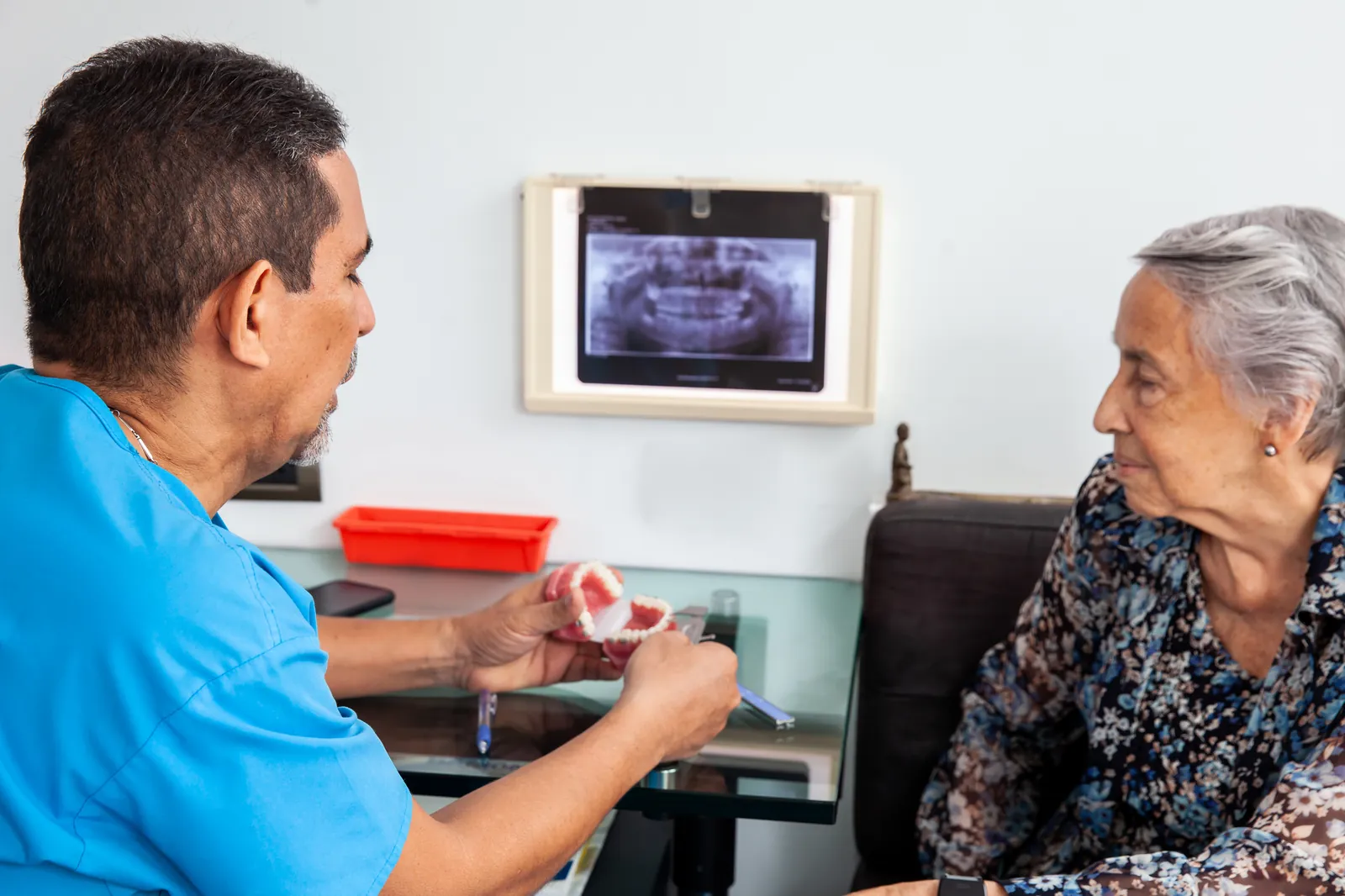
PureSmile Miami opens on November 2, 2026, at 8000 SW 117th Ave, Suite 100, in Kendall. At your first visit, our dentist measures your gums and walks you through your X-rays to explain how much support your teeth have and what your options are. If you need a periodontist, we will tell you. We see patients in English or Spanish, verify your insurance for free and give you a written treatment plan before we start.
Join the waitlist or call us at (305) 787-3642.
No, not on their own, and no toothpaste or home remedy will regrow them. Treatment slows the damage, and in some cases a periodontist can cover the root with a gum graft.
It can be managed and slowed with professional treatment (CDC), but lost bone does not come back on its own. Keeping it from returning takes lifelong home care and regular checkups.
It is an old, informal name for periodontitis, a gum infection that destroys the support around your teeth.
Book a visit soon, do not wiggle it and chew on the other side. A loose adult tooth is not normal, and periodontitis is a common cause.
A desensitizing toothpaste can ease the sensitivity of exposed roots (MouthHealthy). No toothpaste regrows gum tissue.
General information; not a substitute for an in-person evaluation. Sources: MedlinePlus; NIDCR; CDC; American Academy of Periodontology (perio.org); MouthHealthy (ADA); American Heart Association (Circulation, 2025); J Am Dent Assoc (2003); J Periodontol (2018); Periodontology 2000 (2015); Cochrane (2018). Yoan Suárez Zayas, DMD · FL Lic. DN 21413.





