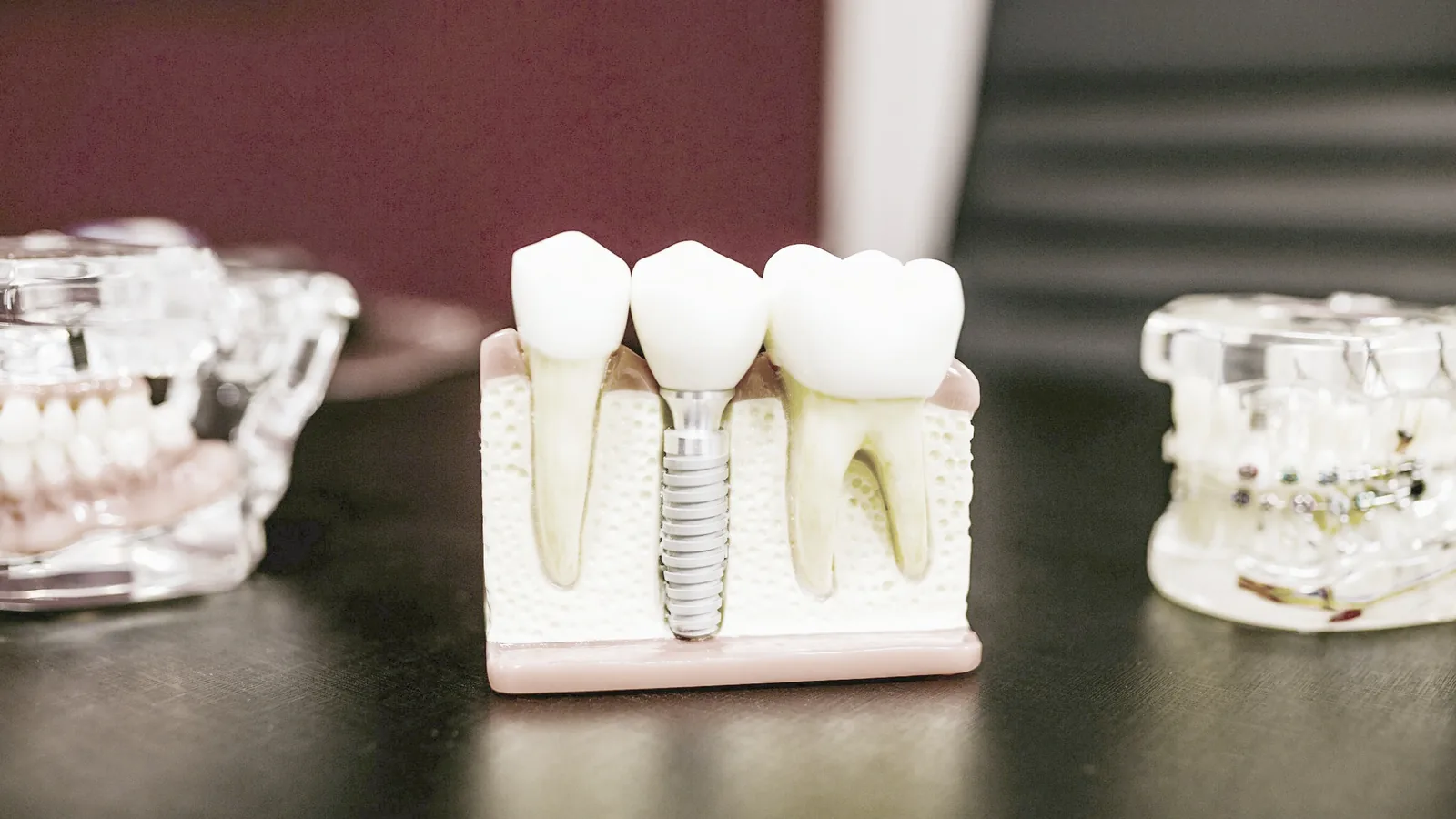
Both options work, and they do not compete: a root canal keeps your tooth and an implant replaces it when it can no longer be kept. In the largest study comparing them, 83.4% of root canal treated teeth and 97.9% of implants were still in place at nine years, but the root canal cost less than half.
The useful question is not which is better, but whether your tooth can be saved with a good outlook.
A study using Sweden's national registry, published in 2026, compared 10,654 root canal treatments with 5,327 implants in similar patients, followed for up to nine years. The implant lasted longer in almost every area of the mouth and cost more than twice as much. In lower front teeth, the root canal did better and cost less.
It is a registry study, not a trial: patients were not assigned at random, and an implant that is still in place is not always free of problems.
A 2026 review that pooled only studies with at least twenty years of follow-up found that 93% of implants were still in place. The crown on top usually needs repair or replacement sooner, and the gum around an implant needs the same care as the gum around a tooth: daily cleaning and maintenance visits.
Keeping the tooth does not close the door on an implant: if the tooth is lost years later, the implant is still an option. More in root canal treatment and dental implants.
PureSmile Miami has been seeing patients since November 2, 2026, at 8000 SW 117th Ave, Suite 100, in Kendall. Our dentist examines the tooth and, when needed, studies it with 3D imaging. He explains on screen whether it can be kept and with what outlook, and gives you each option with its price in writing before we start. If you already have a plan from another office, you can bring it for a second opinion.
Book your visit or call us at (305) 787-3642.
It depends on whether the tooth can be restored. If it can, keeping it costs less and leaves the implant as an option for later. If it cannot, the implant is the alternative with the most support.
In US data, 86% are still in place at ten years. With a crown it lasts longer.
On back teeth, almost always. Studies show teeth with a crown last longer.
General information; not a substitute for an in-person evaluation. Sources: Mota de Almeida, J Dent (2026); Burry, J Endod (2016); Thyvalikakath, J Dent Res (2022); Aquilino, J Prosthet Dent (2002); Lupi, Int J Oral Maxillofac Surg (2026). Yoan Suárez Zayas, DMD · FL Lic. DN 21413.


