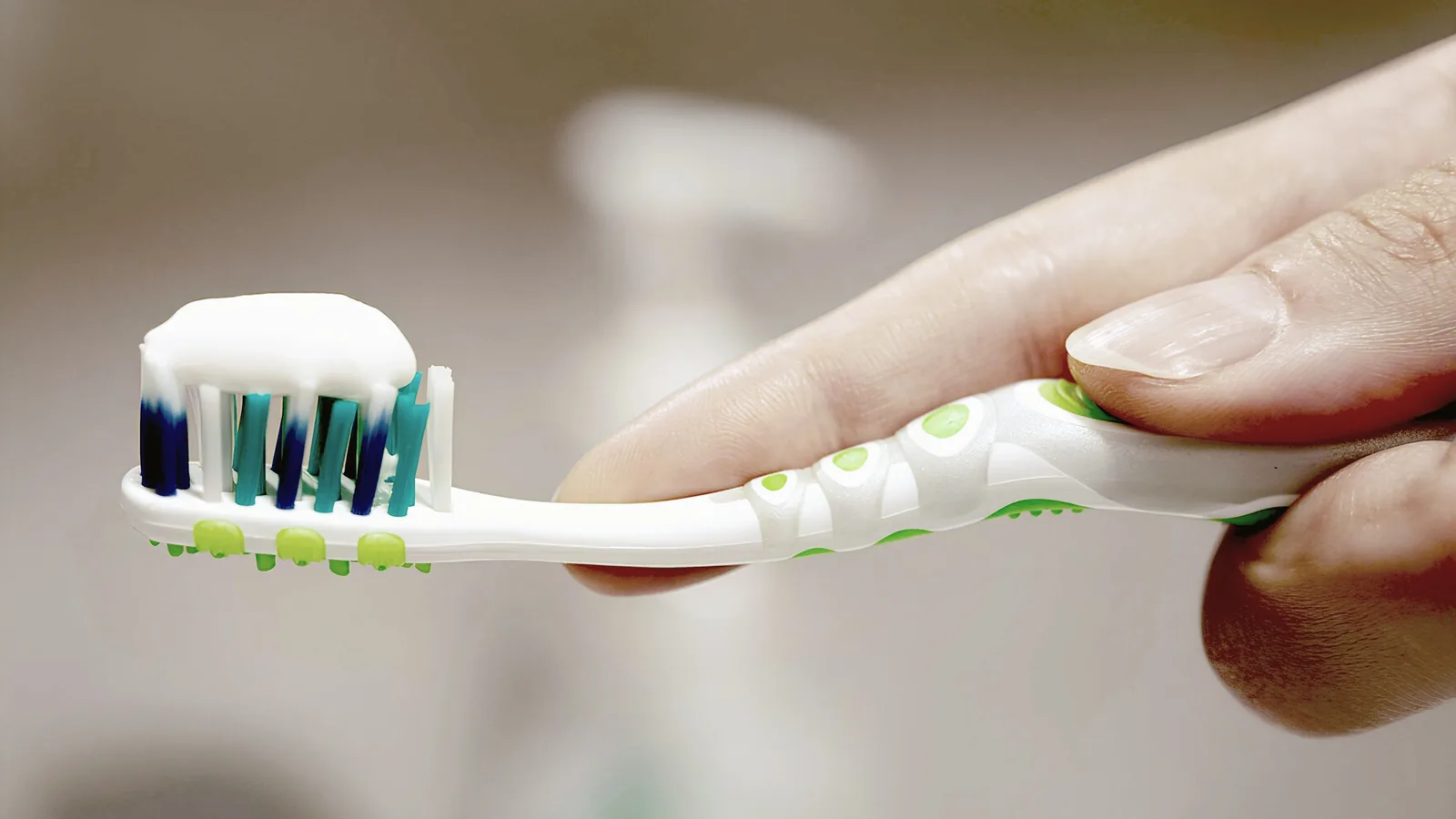
For preventing cavities, fluoride toothpaste at 1,000 to 1,500 ppm is the option with the most clinical trials behind it. Hydroxyapatite toothpaste has favorable early results, but few studies so far. And 5,000 ppm toothpaste, sold by prescription, is for people at high risk of cavities, such as those with exposed roots or dry mouth.
In Miami-Dade the question matters more than it used to, because tap water no longer has added fluoride. Here is what each study measured, with its link, so you can choose calmly.
The county water department stopped adding fluoride on May 29, 2025, and since July 1, 2025, Florida law SB 700 bans it in public water systems. The water still has traces of natural fluoride. The details are in fluoride in Florida water.
Without that daily supply, the fluoride that reaches your teeth is the fluoride you put there: toothpaste and, when needed, the varnish applied at the dental office.
The 2019 Cochrane review pooled the trials that compare toothpastes with different amounts of fluoride. In adults, toothpaste at 1,000 to 1,100 ppm (parts per million) reduced cavities compared with non-fluoride toothpaste: on average, 0.53 fewer decayed surfaces, in studies with 2,162 participants. In young people, 1,450 to 1,500 ppm toothpastes did slightly better than 1,000 to 1,250 ppm.
How you use it counts as much as the brand: twice a day, and spit without rinsing with water so the fluoride stays on the tooth. More in floss, brush, rinse: the right order.
Hydroxyapatite is the mineral enamel is made of. Toothpastes that contain it, sometimes labeled “nano-hydroxyapatite” or “n-HAp,” are sold as a fluoride-free alternative.
The most cited data point is an 18-month trial with 189 adults: 89.3% of those who used hydroxyapatite toothpaste had no new cavities, compared with 87.4% of those who used 1,450 ppm fluoride toothpaste. The study concluded hydroxyapatite was “non-inferior,” with a 20% tolerance margin.
What is missing: the trials are few and short. An independent 2022 review concluded the evidence does not yet show it prevents cavities as well as fluoride. And in the United States, the FDA rule for anticavity toothpastes lists only fluoride compounds as active ingredients.
If you prefer not to use fluoride, it is the alternative with some support. Mention it at your checkup so the rest of your prevention can be adjusted to your cavity risk.
It has about four times more fluoride than regular toothpaste and in the United States it is sold by prescription. It is used when cavity risk is high: roots exposed by receding gums, dry mouth from medications, or frequent cavities.
In a trial with 345 older adults, after two years 35.2% of those using 5,000 ppm toothpaste had new root cavities, compared with 93.5% of those using 1,450 ppm. That is a larger difference than in other studies: a summary of several trials puts it closer to cutting the risk in half.
If you have dry mouth or receding gums, ask at your checkup whether it makes sense for you.
If you have severe pain or facial swelling, call a dentist the same day. Here is our guide to a dental emergency in Kendall: what to do.
PureSmile Miami has been seeing patients since November 2, 2026, at 8000 SW 117th Ave, Suite 100, in Kendall. At your checkup, our dentist assesses your cavity risk with your X-rays in front of you and tells you which toothpaste and which extra fluoride make sense for you, and why. We see patients in English or Spanish and give you a written treatment plan and price before we start.
Book your visit or call us at (305) 787-3642.
In an 18-month trial in adults it was non-inferior to 1,450 ppm fluoride toothpaste, but there are few studies. Fluoride toothpaste still has the most evidence.
A fluoride toothpaste at 1,000 to 1,500 ppm, twice a day, spitting without rinsing. If your cavity risk is high, ask about 5,000 ppm.
Yes, in the United States it is sold by prescription. It is used mainly for root cavities, dry mouth or frequent cavities.
It is better to spit out the excess and not rinse with water, so the fluoride keeps working on the tooth.
General information; not a substitute for an in-person evaluation. Sources: Cochrane (Walsh, 2019); Paszynska, Front Public Health (2023); Wierichs, Clin Oral Investig (2022); León, J Dent (2019); Ekstrand, Caries Res (2016); FDA (Monograph M021); Florida Senate (SB 700, 2025); Miami-Dade WASD. Yoan Suárez Zayas, DMD · FL Lic. DN 21413.


